
News
Access the latest news and updates from British Orienteering.
12 August 2026
Lead the Next Generation of British Orienteering Success
British Orienteering is looking for an exceptional leader to help shape the future of our performance pathway and inspire the next generation of international athletes.
20 August 2026
Junior European Cup teams confirmed
The full teams for this year’s Junior European Cup (JEC) have now been confirmed, with the junior selection panel completing the selection of the remaining places following the pre-selections announced in April.
19 August 2026
Dates released for the Major Events Conference 2026
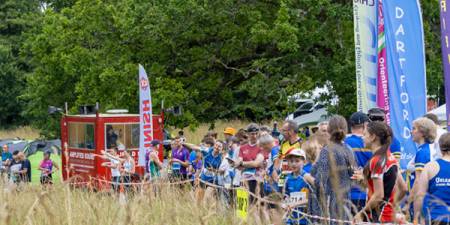
This year's theme will focus on Navigating the Future: Reviews and Rules, Safety and Scenarios.

17 August 2026
World Masters Orienteering Championships 2026 sees many of our members take podium places
British Orienteers enjoyed an outstanding World Masters Orienteering Championships (WMOC) 2026, with more than 100 competitors from Great Britain taking part and members achieving a host of podium finishes across the Sprint, Middle and Long Finals.

13 August 2026
Deadline for SOA's Senior Development Post applications extended
Scottish Orienteering are seeking a highly motivated individual to join their SOA Development Team as a Senior Development Officer. This is an exciting time to join the team as we look forward to the Summer of Sport and increase knowledge of/participation in our sport across the age ranges.

11 August 2026
World Cup 3 Round-up
Following a sprint focus in the senior international competition calendar during the first half of the year, World Cup 3 moved to the forests of Czechia last week for a set of tough, technical races. Athletes faced the challenge of navigating steep rocky hillsides through a mix of forests, ranging from excellent visibility to full-on fight!

10 August 2026
British Orienteering announces changes to the Performance Management team
British Orienteering has announced that Pippa Archer and Rachael Handley will shortly leave their respective roles as Performance Manager and Performance Administrator within our GB Team.
8 August 2026
World Cup Round 3: Middle Distance Results
World Cup 3 continued with the middle distance finals in Czechia.
6 August 2026
World Cup Round 3: Long Distance Finals
Today the Orienteering World Cup continued in Czechia with the long finals.

6 August 2026
ETOC 2026 concludes some fantastic results for the GBR TrailO team
The European TrailO Championships (ETOC), based in Szczecin in northern Poland, ended on Monday with fantastic results for the British Team. At the concluding event, the Relays, our Open GBR Team 1 were only 6 seconds behind the winners Finland and finished in second place with the silver medals. The new British Junior team just missed out on a podium place by coming in 7th.

5 August 2026
World University Championships 2026 - Individual Sprint & Middle Distance
Catch up on the latest news from the World University Orienteering Championships in Vila Real, Portugal. The penultimate day saw athletes compete in the individual sprint, before the championships came to a close with the middle distance race in the forest.

4 August 2026
British Team Ready for World Cup Round 3 Challenge in Czechia
The international forest season continues this week as Great Britain heads to Czechia for Orienteering World Cup Round 3. Athletes from across the world will compete in a demanding programme of qualification, long distance, middle distance and relay races between 5 and 9 August.

30 July 2026
World University Championships 2026 – Vila Real, Portugal
The latest news from the World University Orienteering Championships in Vila Real, Portugal.

28 July 2026
Become a British Orienteering Club Instructor – Join our next training session on 31 October-1 November 2026
Passionate about orienteering? Ready to inspire others? The British Orienteering Club Instructor Qualification is designed for affiliated club members who want to introduce newcomers to the sport in a safe, enjoyable, and supportive way. We would like to invite you to take part in our upcoming training course in Ilkley, West Yorkshire from Saturday 31 October - Sunday 1 November 2026.
22 July 2026
British Orienteering launches Youth Voices Programme
British Orienteering is today proud to launch its new initiative, the Youth Voices Programme, because Youth Direction Matters. Could you help us shape the future of our sport?
20 July 2026
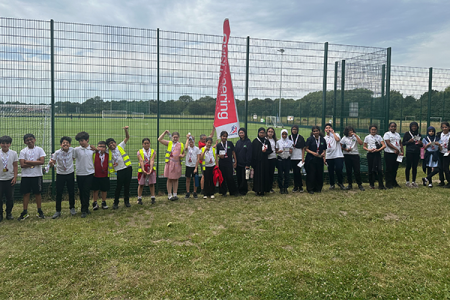
Young People Discover Orienteering at Hough End as Part of National School Sports Week
Young people from primary, secondary and SEND schools across Manchester came together at Hough End Playing Fields recently to enjoy a day of exciting orienteering activities delivered by British Orienteering as part of National School Sports Week.

20 July 2026
British Orienteering is seeking an Independent Non-Executive Director to join our Board of Directors
British Orienteering is seeking an Independent Non-Executive Director to join its Board, working alongside the Chair, Elected Non-Executive Directors, and the CEO.

15 July 2026
WOC 2026 Round-Up
Last week the 2026 World Orienteering Championships took place in Genoa, Italy. WOC alternates between sprint and forest disciplines each year, and this year was a Sprint WOC.

13 July 2026
New campaigns aims to draw students and school leavers to our sport
Today, we are delighted to launch our brand new campaign targeted at university students and school leavers to come and join the world of orienteering.

11 July 2026
WOC 2026: Sprint Relay Results
The World Orienteering Championships 2026 concluded today with the Sprint Relay Race.

10 July 2026
WOC 2026: Knock-out Sprint Results
The International Women's teams were the first to run in today's Knock-Out Sprint Final at the World Orienteering Championships 2026.

9 July 2026
WOC 2026: Knock-out Sprint Qualification
Today, the Knock-out Sprint Qualifications got underway at the World Orienteering Championships 2026.

9 July 2026
IOF publishes Independent Investigation Panel Report on World Games 2025 Orienteering
The International Orienteering Federation has today published the final report from the Independent Investigation Panel concerning the organisation of the IOF Middle Distance event at The World Games 2025 in Chengdu, China.

8 July 2026
JWOC 2026 Round-up
The 2026 Junior World Orienteering Championships (JWOC) came to a close in Sweden after a week of high-quality competition across the sprint, forest and relay disciplines. Team GB delivered a series of encouraging performances, with several athletes achieving personal best results at Junior World Championship level and demonstrating the continued progress of the British Orienteering Talent and Performance Programmes.

7 July 2026
WOC 2026: Sprint Qualification & Sprint Final Results
Day 1 of the World Orienteering Championships saw the Sprint Qualification take place in the morning, followed by the Sprint Final in the afternoon.

6 July 2026
Navigation Festival set to return to the National Trust's Hardwick Hall this weekend
Following a successful launch last July, Derwent Valley Orienteers are preparing to bring back the Navigation Festival to Hardwick Hall this Saturday 11 July 2026.

5 July 2026
World Cup Round 3 annoucement
The GB team has been selected for World Cup Round 3 in Vyšší Brod, Czechia, , which will take place from 5-9 August 2026.

4 July 2026
JWOC 2026: Relay Results
It was back to Bussevik for the forest relay on Saturday for the last event of JWOC.

3 July 2026
JWOC 2026: Middle Results
Following the rest day, Team GB returned to competition for the Middle Distance race, held in the technically demanding forests of Bussevik on the Torhamn peninsula.

1 July 2026
JWOC 2026: Long Results
International orienteering descended on the forest of Augerum for the Junior World Orienteering Championships Long Race today. Here are the results.