
Competing after dark adds layers of risk on top of those normally present at an orienteering event; particularly those relating to navigation difficulty, visibility to road traffic, visibility of hazards in the terrain, and problems in locating a lost or injured participant.
There will be some events where the decision has to be that juniors below a particular age are not permitted to run unaccompanied (e.g., as per rule 11.20, for juniors aged under 16 years of age on the day of the event, courses must not have any routes that might plausibly require them to cross roads with significant traffic unless appropriate traffic management arrangements have been put in place).
Image credit: Rob Lines.
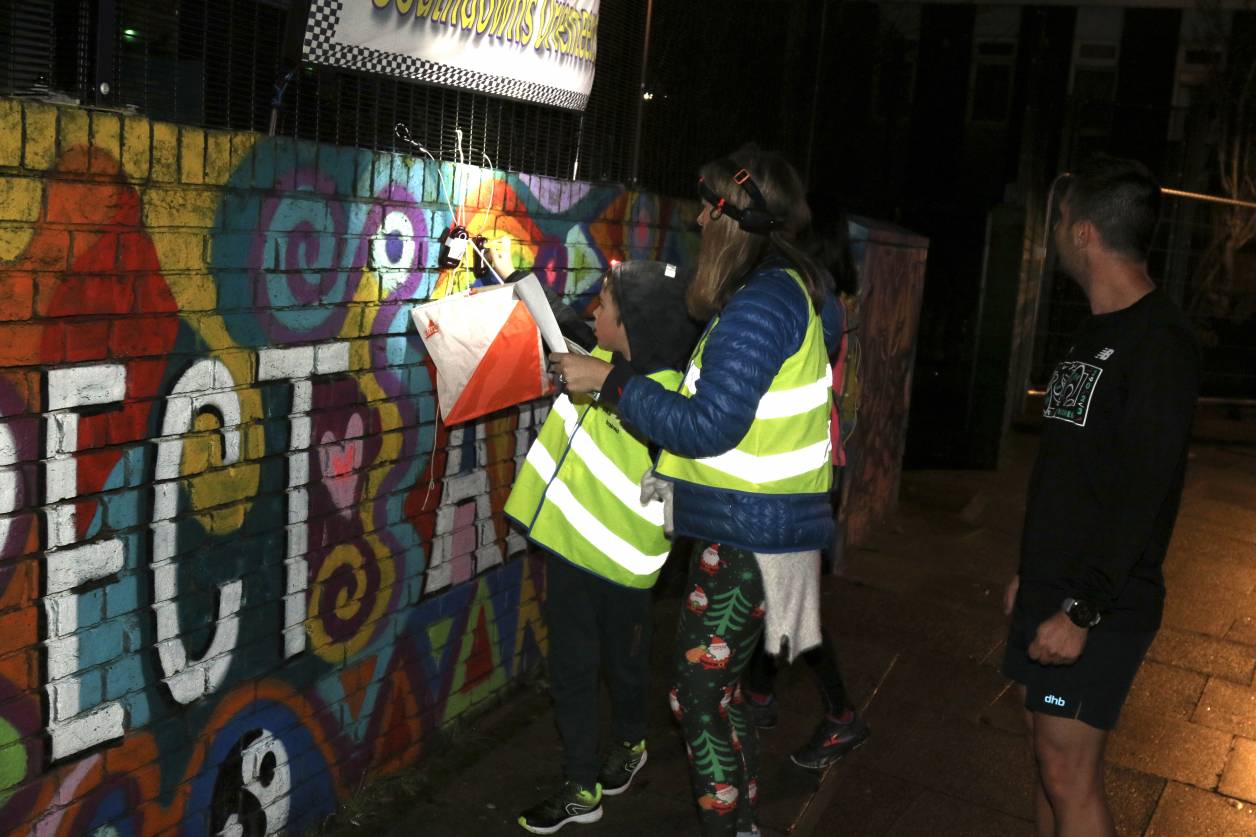
Below are a number of safety considerations event officials should bear in mind for night events for all participant groups(!) but especially where juniors will be allowed to compete unaccompanied:
- Experience/competence checks (e.g. only allowing juniors to run unaccompanied if normally able to complete a TD5 course successfully).
- Avoiding incentives for juniors to run solo at night before they are ready by including accompanied junior categories, which also get medals or prizes.
- Considering whether there are any areas made inappropriate by increased ‘stranger danger’ at the time of the event: at least one previous Peter Palmer Relay had safe adults (identified by fairy lights) stationed in a public car park skirted by the longer courses.
- Ensuring participants are visible to traffic (e.g. mandatory high visibility clothing) and paying even greater consideration than normal to traffic risk management arrangements such as timing out or marshalling crossings.
- Avoiding participants coming across unlit hazards at speed in the dark: everything from forest event cliffs / steep slopes / rough ground / eye-poking branches to urban event steps/street furniture/scaffolding poles presents greater risks to those running at night.
- Ensuring lost or injured participants can summon help (e.g. mandatory carrying of whistles and/or mobile phones).
- Ensuring participants would still be able to read their map if their head lamp failed (e.g. mandatory backup lighting for events which are not street lit).
- Ensuring that the people and equipment needed to carry out a search will be available; it is no use only having head torches with batteries already run flat during the event!
- Considering making particular clothing or equipment mandatory for juniors, even if it is not being made mandatory for adult competitors.
View all posts
More Blog Posts

AI Meets Authenticity: Creating content that stands out from the noise
5 October 2026
Last month, British Orienteering shared an AI-generated image on social media. While it was a one-off, it sparked plenty of conversation and raised an interesting question: how can we make the most of AI without losing what makes our sport—and our clubs—unique?
When should I report an incident to British Orienteering and why?
1 October 2026
British Orienteering has had a new online incident reporting system up and running since May 2025, but there are still a number of clubs who have yet to report anything into it at all…
Pre-JWOC 2027 Camp, Poland: 10th - 16th August 2026
24 August 2026
Last week a select group of British athletes joined up with members of the Irish junior squad for a training camp in preparation for the 2027 Junior World Orienteering Championships in the Kłodzko Valley of Lower Selesia, Poland.