Studland Heath, Purbeck National Nature Reserve - Wessex Orienteering Club (WSX)
Overview
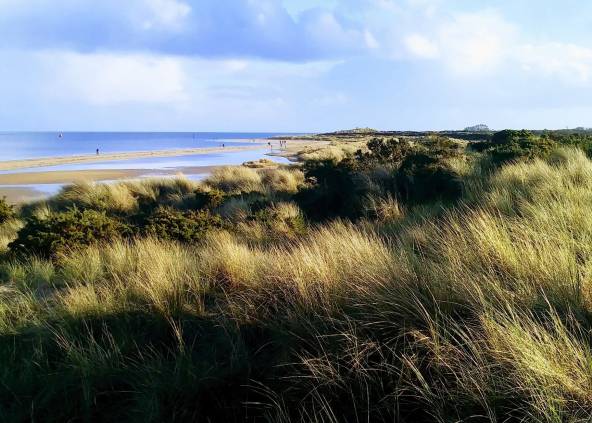
Studland Heath, part of the Purbeck National Nature Reserve in Dorset, is a nationally important heathland and sand dune system managed by the National Trust. Despite its sensitive designations, the site has successfully hosted orienteering activities for several years, demonstrating that well-managed orienteering can be compatible with and even beneficial to heathland conservation objectives.
This case study highlights how positive communication, strong environmental awareness, and careful planning have enabled continued access to a Site of Special Scientific Interest (SSSI).
What events have WSX held at Studland Heath?
Wessex Orienteering Club have now hosted several events at Studland Heath, including most recently a regional-level event as part of their club’s Purbeck weekend in 2025. This event saw up to 200 participants take part in a variety of courses throughout the day.
Permissions and Access Agreements
Initial engagement for access to Studland Heath began after the club became aware that the National Trust were actively encouraging recreational use of the dunes and heath over the winter to support biodiversity.
The club approached the National Trust to discuss orienteering activity and subsequently worked with them to obtain consent from Natural England.
Natural England granted a five-year licence, recognising that orienteering, carried out with appropriate safeguards, is compatible with the site’s conservation objectives.
Access Period
Orienteering at this site is permitted from the start of October to the end of February. This falls in line with the bird breeding season, which is a primary ecological sensitivity on the site and formed a part of the Natural England agreement
Addressing Environmental Sensitivities
From the outset, WSX were able to clearly demonstrate ecological understanding and a proactive approach to environmental protection. They were able to identify the sites sensitivities and address these with the landowner when initiating conversations around access.
What are the key site sensitivities planners were made aware of?
Breeding birds
Studland Heath is well known for the presence of Nightjars and Woodlarks, hence why there is no orienteering activity permitted during the breeding season (March to September).
Mires and bogs
On this site, there are mires and bogs, which must not be crossed due to the presence of highly sensitive, rare plant species. As with the breeding bird season, avoidance of mires is a condition of the access agreement.
Reptiles, Amphibians and Invertebrates
Dorset heaths are also home to a wide range of reptiles, amphibians and invertebrates, such as Sand Lizards and Common Lizards.
What actions were taken to address site sensitivities?
Firstly, the planner was briefed on the site’s ecology, to ensure a comprehensive understanding of the area, and where site sensitivities lie. Out-of-Bounds areas were discussed with National Trust and embedded into planning from the outset.
During course planning there were several actions taken to ensure sensitive areas were avoided, and all participants were aware of the restrictions:
- Bogs and mires were clearly marked as Out-of-Bounds (OOB) on maps.
- Course layouts were designed to naturally steer competitors away from the sensitive areas, and to avoid the temptation to pass through these mires.
- Explicit instructions regarding the avoidance of mires were included in event details, reinforcing this as a condition of the access agreement to all participants.
- The planner ensured that the courses were thoughtfully distributed across controls to avoid concentrated footfall at each control site. This means that no more than two or three courses went to the same control.
On a neighbouring site where a mire crossing is unavoidable, a pre-agreed physical marker was used to indicate exactly where crossing is permitted, mirroring best practice used for fence crossings at other events.
Ecological Outcomes and Wider Benefits
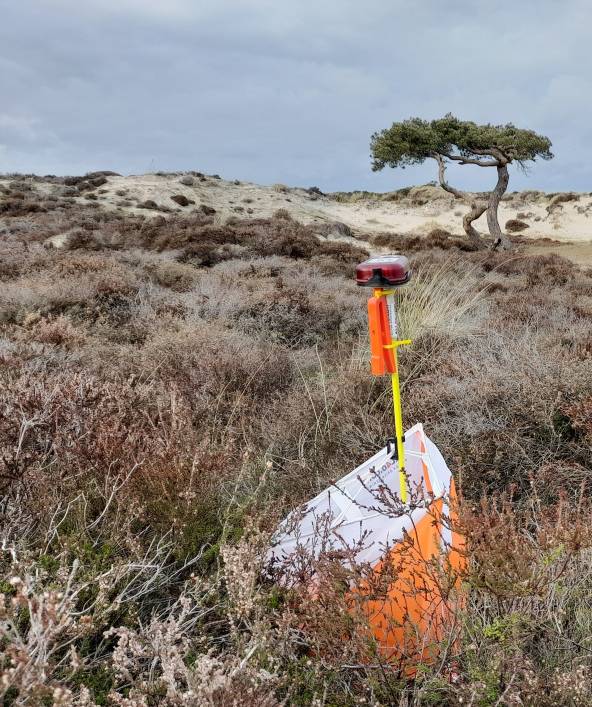
Sand dune systems are dynamic and can be resilient to disturbance where vegetation remains intact, with plant communities playing a key role in stabilisation and recovery. While unmanaged trampling can damage dune vegetation, research shows that some plant communities can recover from low levels of disturbance when appropriately managed. Structural diversity, such as varied heather growth and patches of bare ground is important in supporting invertebrates and wider biodiversity in dune and heathland systems.
Although direct evidence is limited, it is plausible that low-intensity, seasonal and dispersed activity such as orienteering could contribute to this heterogeneity in a similar way to other light disturbance processes. Orienteering is generally considered a low-impact activity, and with around 200 participants, effects are likely to be localised and short-term where events are carefully managed and routed.
While the club make a generous donation following the use of the area, National Trust were also able to generate additional funds through the use of their car park as well as the café where participants thoroughly enjoyed a hot drink and a snack following their run!
Communication with landowners
A core reason for the success of access at Studland Heath has been strong, consistent communication. WSX initially met National Trust staff in person to explain what orienteering involves. Following this, only one, dedicated contact within the club handled all landowner communication, which the National Trust values greatly. This streamlines all information and avoids confusion between different channels.
The result of strong relationships and clear accountability has led to continued support and a welcomed view for events each year.
Supporting Evidence: Club Ecology Report
To further support access negotiations, Jolyon Medlock, member of Wessex Orienteering Club, has recently produced an Ecology Report focused on orienteering in heathland environments.
The purpose of the report is to explain how orienteering activity can coexist with heathland conservation and highlight the mutual benefits for vegetation structure and invertebrate diversity. Wessex Orienteering Club are hopeful this report will be a useful tool to support future access and demonstrate environmental responsibility.
For further information on this report, please contact Wessex’s Club Secretary at secretary@wessex-oc.org.uk.
Many thanks to Jolyon Medlock and Wessex Orienteering Club for sharing their experiences of orienteering at Studland Heath!
More Blog Posts
Pre-JWOC 2027 Camp, Poland: 10th - 16th August 2026
24 August 2026
GB Squad heads to Hungary for pre-WOC 2027 training camp
27 July 2026