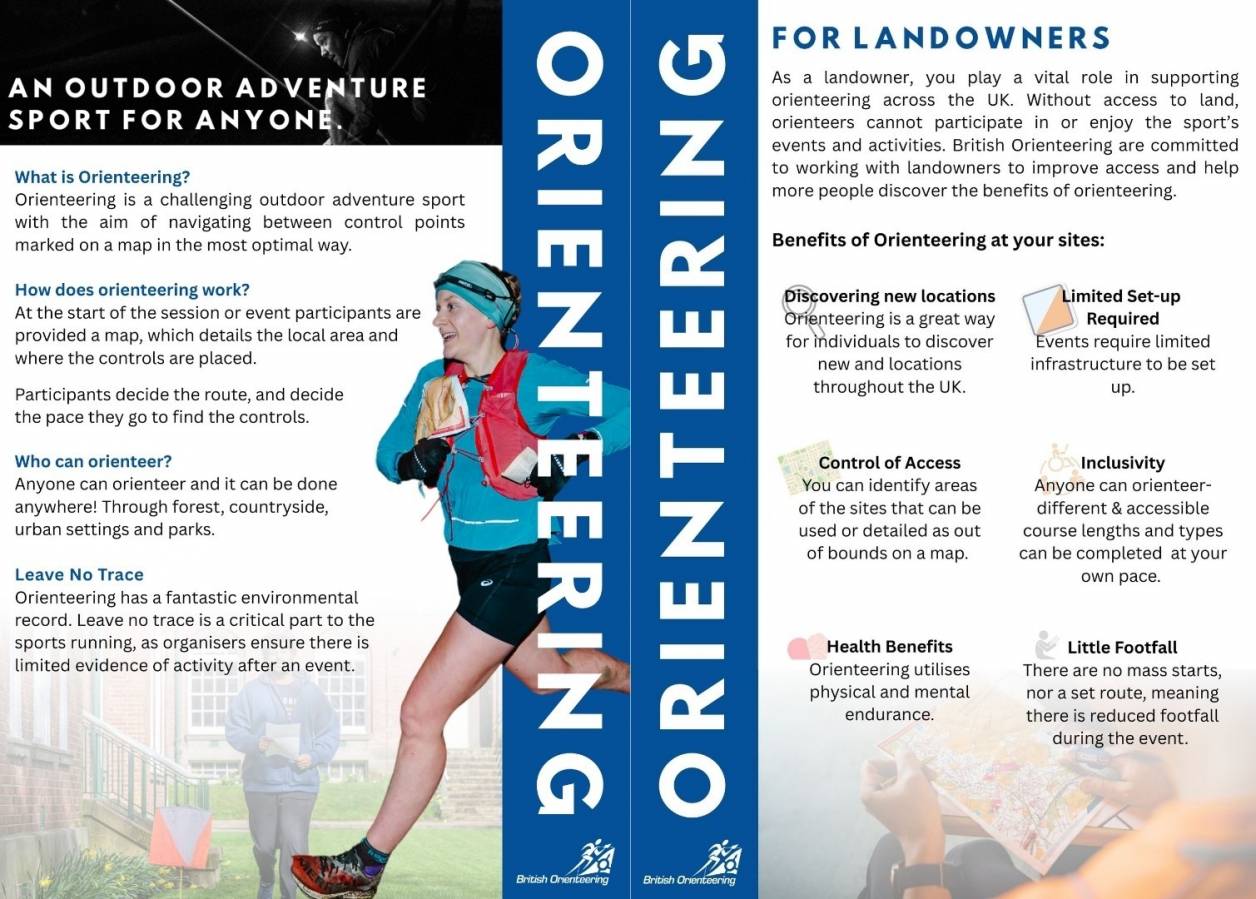
What is Orienteering?
This page will delve into what orienteering is, the types of events within the sport and how British Orienteering are committed to working with Landowners.
What is Orienteering?
Orienteering is an outdoor adventure sport, where participants navigate between checkpoints (called controls) using a specially designed orienteering map. It is a non-motorised activity, meaning there is no need for vehicles or heavy equipment. An organiser may bring a small generator to power laptops or lighting.
Courses vary in length and difficulty, so participants will visit different controls depending on their course difficulty. There is no set route for participants to follow, which helps spread footfall and results in minimal environmental impact.
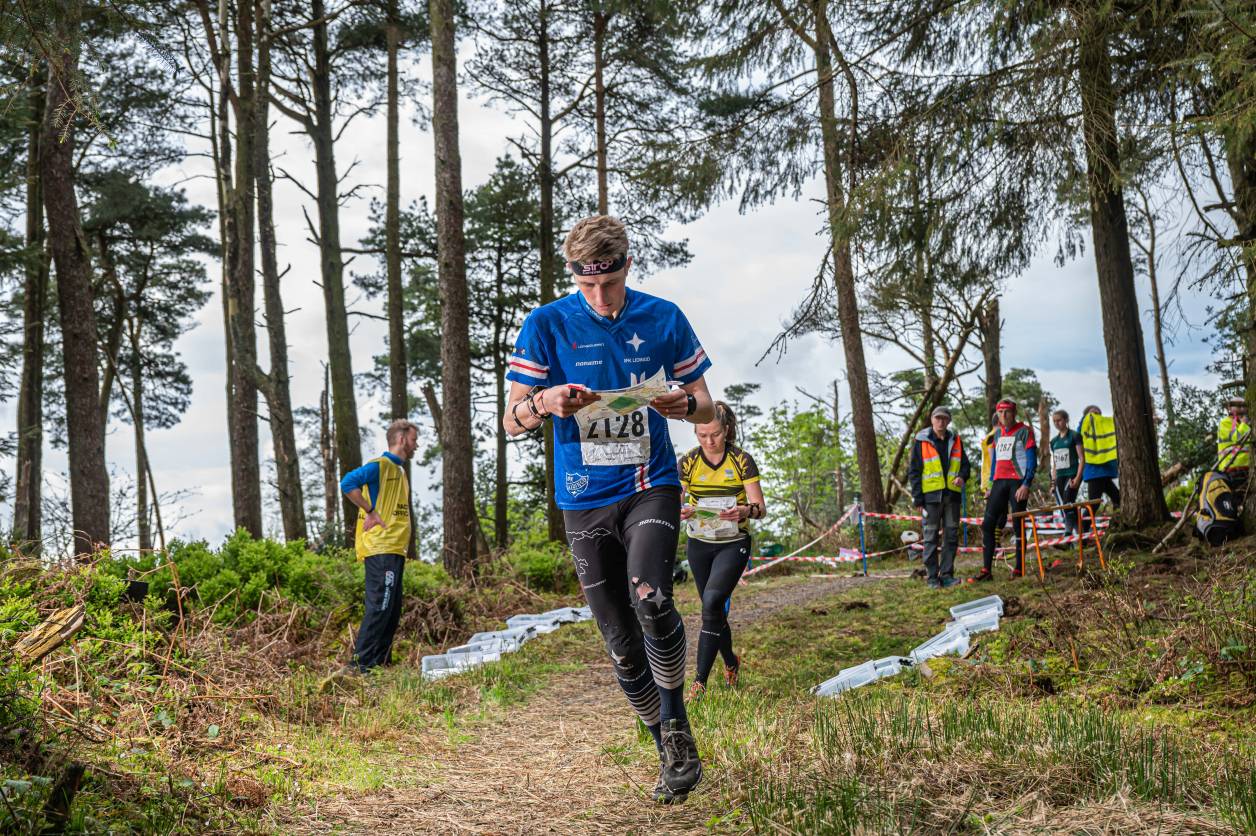
Types of Orienteering Events
Line Course
Participants navigate the course in the specific order shown on the map. These courses are usually timed, with participants placed based on the time taken to complete the course by reaching all the controls in the correct order. These courses are often colour coded or split by age group to devise differences in difficulty and distance for competitors.
Score Course
Participants can navigate the controls in any order and earn points for each one visited. A score course will have a time limit, with points deducted for exceeding it.
Permanent Orienteering Course
A course that remains in place permanently, typically marked by wooden posts with coloured plaques. These plaques are shown on a map, which can be accessed online or at a designated location such as an information centre.
Virtual (GPS) Orienteering Course – Often referred to as Maprun. These courses are digital and accessed via a mobile device or tablet. Relying on GPS data to confirm location, they do not need permanent infrastructure. Maps are available to download via the free Maprun app direct to a device, or paper-based versions for use with the app via Go Orienteering and Club websites.
Trail-O
TrailO provides an orienteering competition for people of all levels of physical ability, including those who are physically challenged and may be confined to wheelchairs. There are two types of Trail-O; PreO and TempO. You can find out more about Trail-O, here.
Orienteering Equipment
The controls
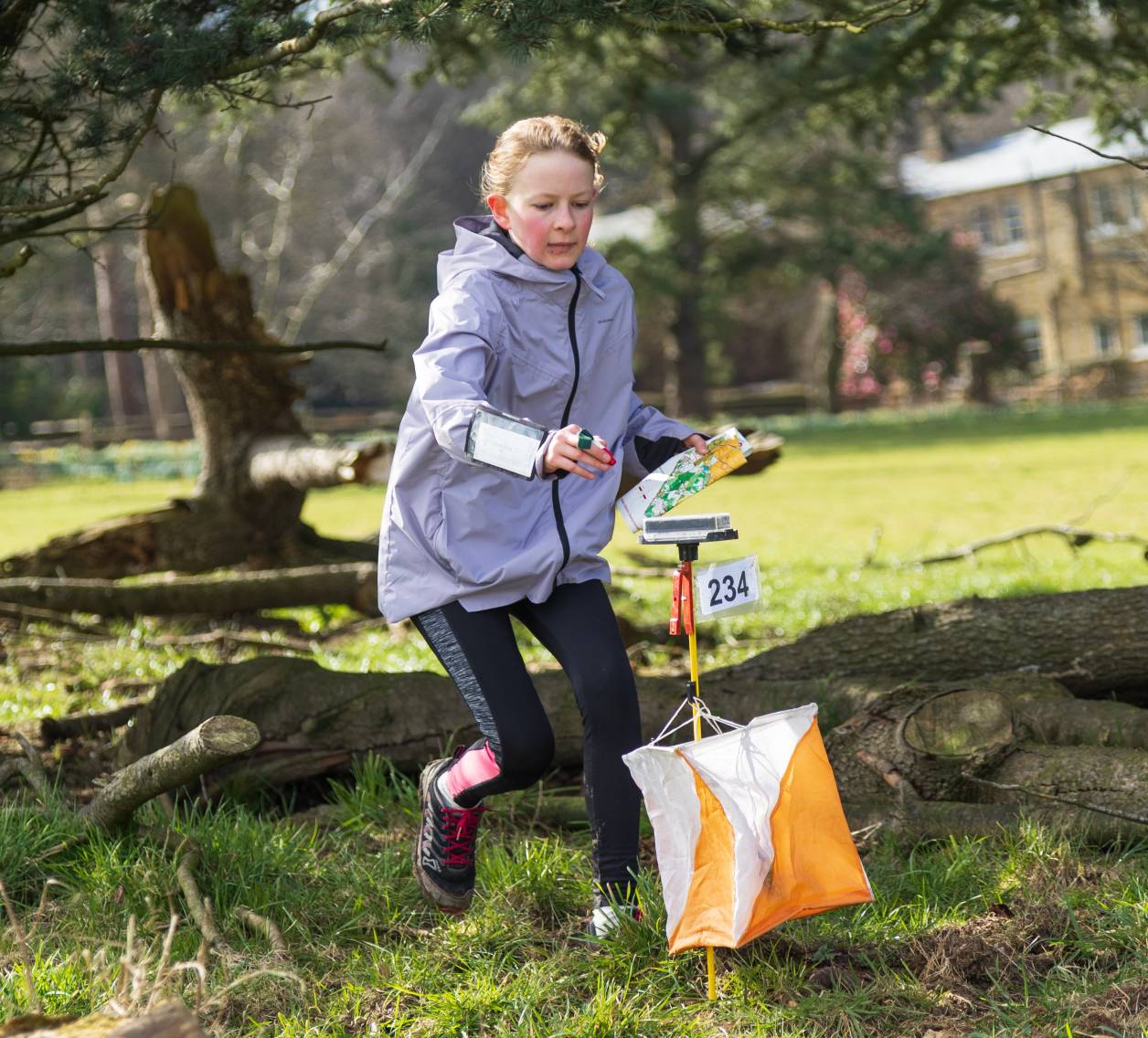
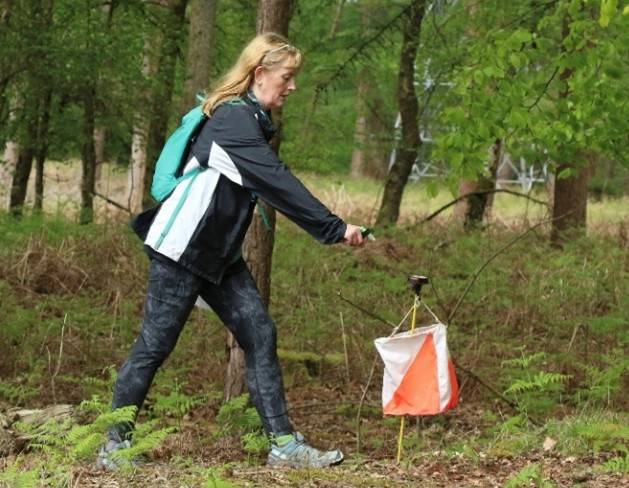
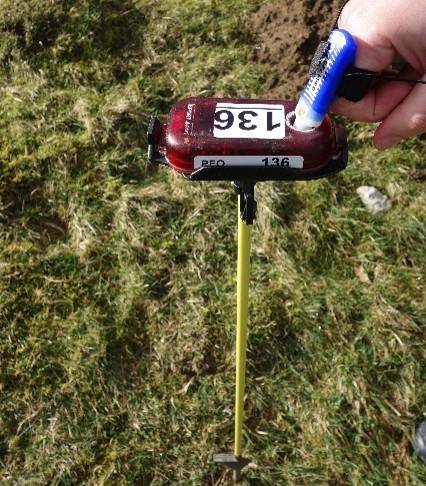
The images below show a typical orienteering control. A control consists of an electronic box mounted on a stake, which can be inserted into the ground, attached to existing infrastructure, or placed on a freestanding base. Each control is marked with an orange and white kite, making it easily identifiable to participants.
As competitors reach the control, they will approach it as shown in the image below. The participant, punches the electronic box, which records their visit and confirms that they have reached the correct location.
Event Assembly
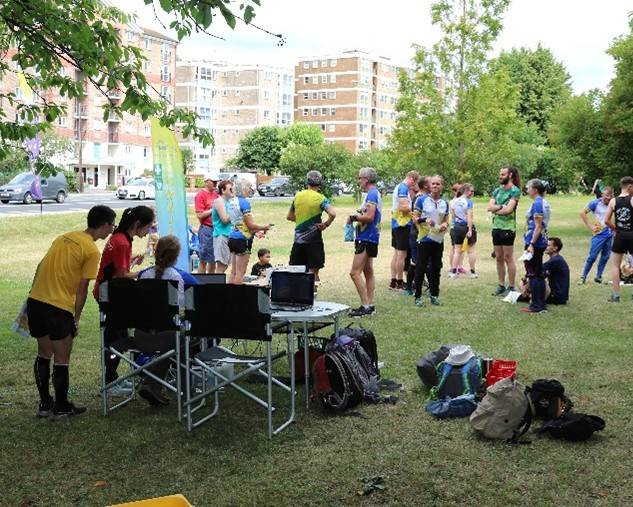
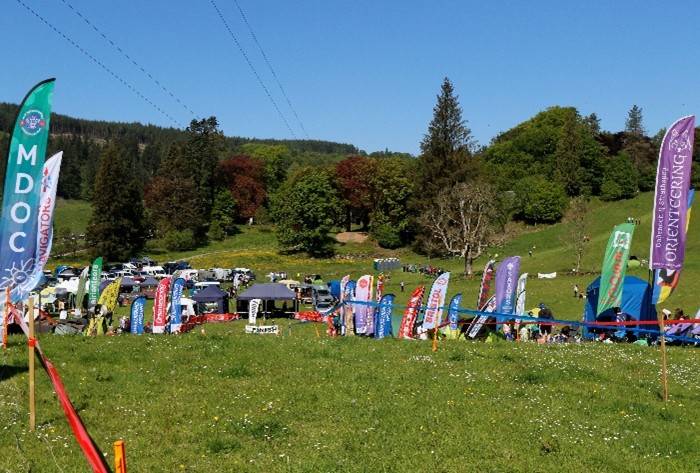
The Event Assembly may resemble the two images below. The first image shows a small local event setup, while the second depicts a larger area used at a British Championships. The size and layout of the assembly will vary based on the type of event and the expected number of participants. Event organisers will discuss the size of the event assembly with the landowner.
Participant Profiles
Depending on the type of event, there may be many participants in attendance. At smaller-scale, local events you will find a mixture of beginner and experienced orienteers, including small groups and families. For regional level events and up, there may be more experienced orienteers across the senior and junior categories.
Seniors
Seniors are orienteers over the age of 21.
Juniors
Juniors are anyone below the age of 21.
Families & Groups
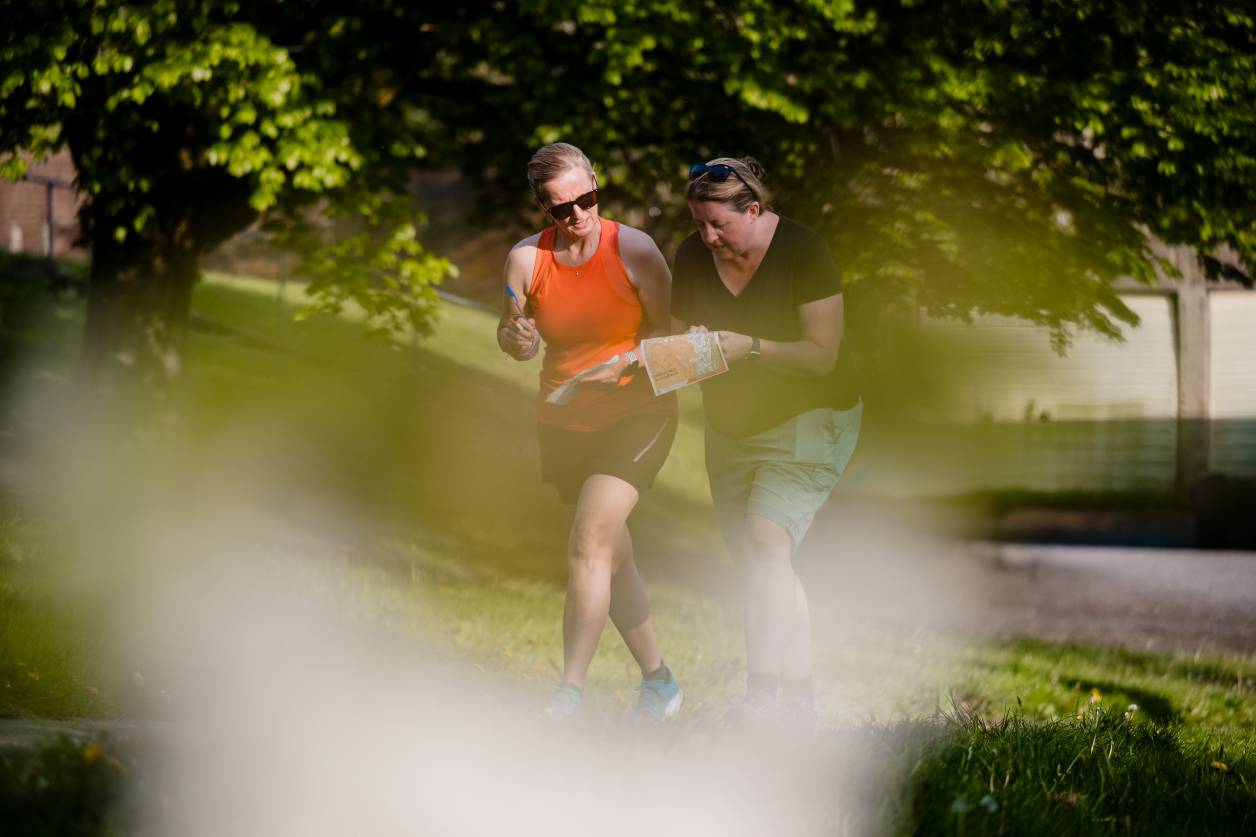
Many orienteering events will welcome families and groups to navigate the course together.
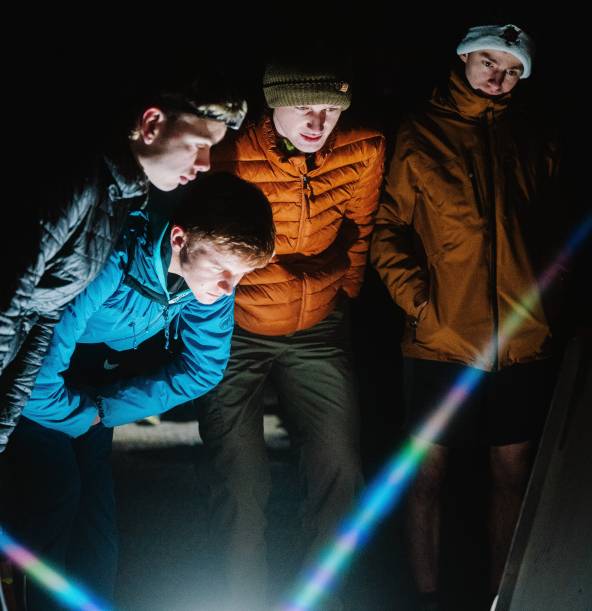
How British Orienteering will work in partnership with landowners
British Orienteering are committed to working collaboratively with landowners to promote:
- Responsible Recreation
- Education
- Health & Wellbeing
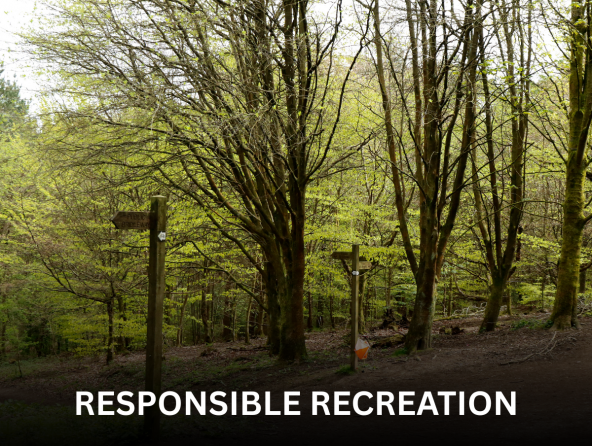
To ensure events are carefully planned to avoid environmental damage, and to champion responsible land use. Clubs must follow best practices in land use and event management.
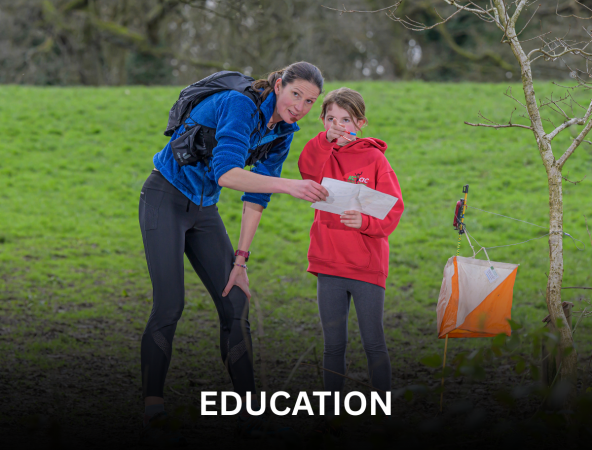
Orienteering is a mentally and physically engaging sport that teaches valuable skills such as map reading and compass use. It also raises awareness of environmental seasons and encourages exploration of natural spaces that participants might not otherwise visit.
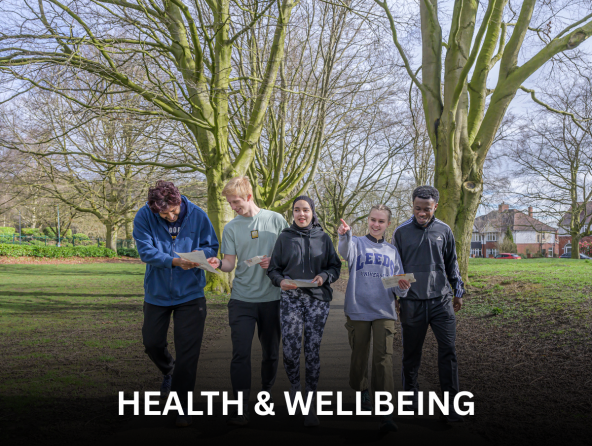
With many people in the UK not meeting recommended activity levels, orienteering offers an inclusive and enjoyable way to get active. By supporting orienteering, landowners play a vital role in helping communities access the outdoors and improve their physical and mental health.